Stough Canyon Water and Post-War Walls
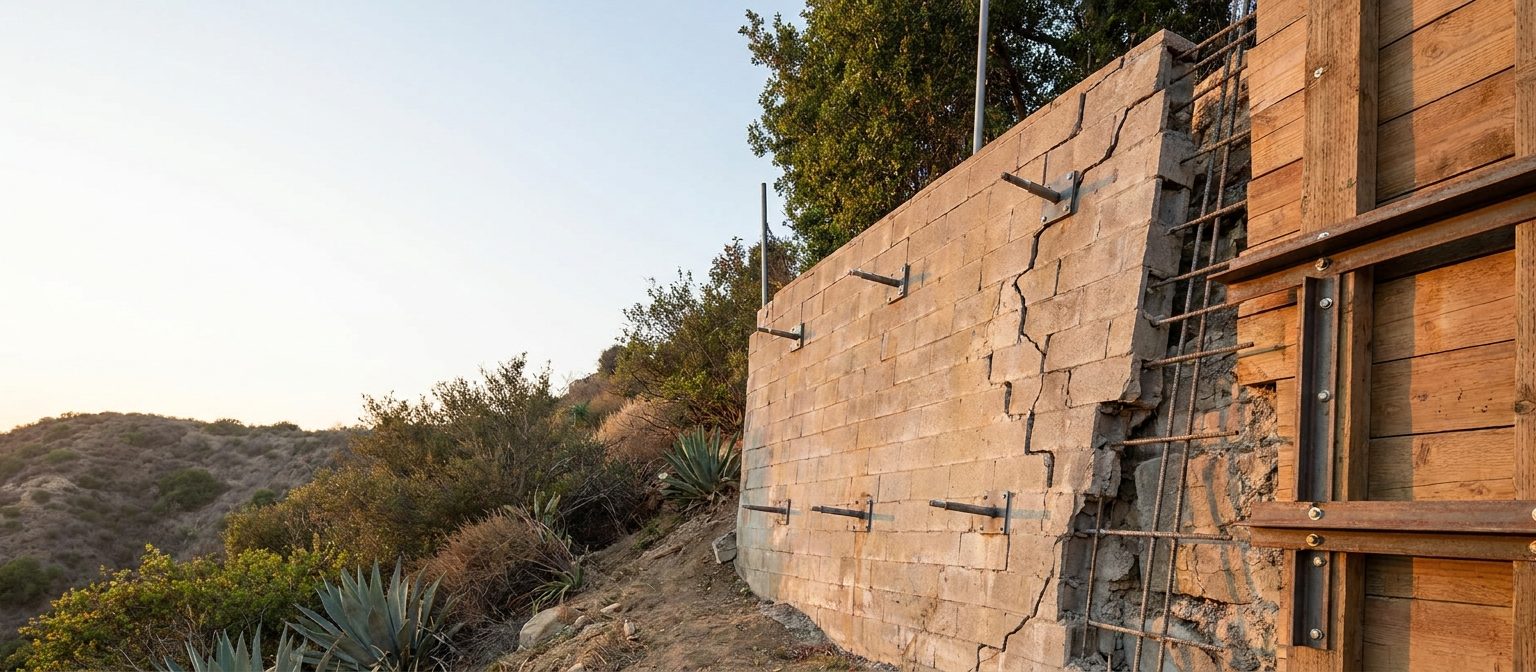
Burbank's repair calls come almost entirely from the northern hillside blocks — the streets below Stough Canyon and Wildwood Canyon Park, and the neighbourhoods above Sunset Canyon Drive. The housing stock there is largely post-war, and so are the walls: low, mortared, and built to hold a modest cut into the hillside for a driveway or a level pad.
What has changed since is the volume of water arriving. Development uphill, paved surfaces, and decades of irrigation mean the canyons now deliver more concentrated flow to those old walls than they ever saw when they were built. The walls have not got weaker so much as the job has got harder.
What We Look For on a Burbank Wall
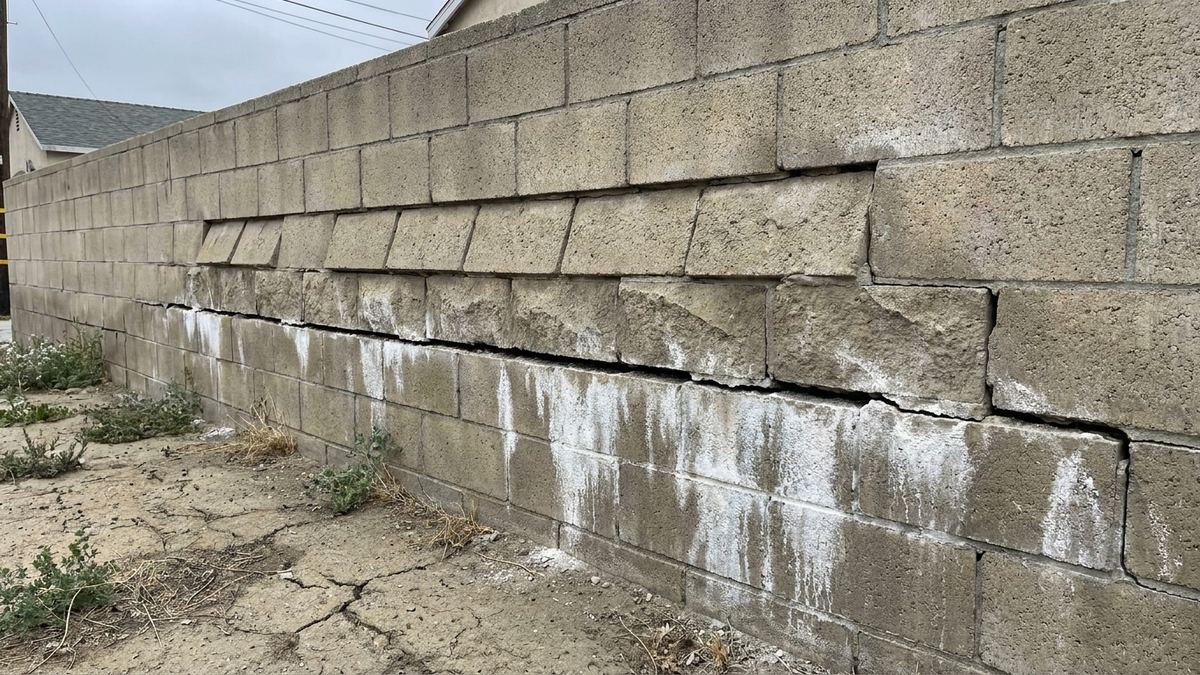
- Scour at the base after storms. Concentrated flow taking material out from the toe of the wall.
- Mortar washing out of joints. The wall losing its integrity from the outside in.
- A driveway slab cracking above the wall. The load path shifting as the ground behind the wall moves.
- Damp lines that persist through summer. Water is not just arriving, it is being held.
- One panel out of line with the rest. A local failure rather than a whole-run problem, and often cheaper to address early.
What Is Actually Causing It
More water than the wall was ever designed to see, arriving faster because of what has been paved uphill of it. On these older mortared walls that shows up as joint erosion and toe scour long before the wall visibly leans.
How We Repair Walls in Burbank
Intercept flow above the wall.
Cutting the volume that reaches it is usually cheaper than strengthening the wall to cope.
Rebuild the toe and repoint.
On walls that are otherwise sound, this restores what the water took away.
Retrofit drainage behind.
Giving the water a designed route instead of finding its own.
Replace where scour has undercut the footing.
Once the footing has lost bearing, repointing the face achieves nothing.
Assessment Before Anything Else
Every Burbank repair starts with working out which of those causes you actually have, because the wrong diagnosis is how people spend a great deal of money without fixing anything. The visit is free, you get an itemised written scope, and if a repair will hold we say so — and if it will not, we say that too. Permits, where the work needs them, go to the City of Burbank.
Retaining Wall Repair FAQ's for Burbank
Water runs down my driveway and past the wall. Is that the cause?
Very often, yes. Concentrated surface flow scours the base of a wall in a way that steady seepage does not, and it is frequently easier to redirect the water than to rebuild for it.
The mortar is washing out. Is the wall unsafe?
Not necessarily yet, but it is on a path. A mortared wall works as one mass; losing the joints means it gradually stops doing that.
Does Burbank issue its own permits?
Yes, its own building department with its own hillside development requirements — separate from both LADBS and Glendale next door.
Can one bad panel be replaced on its own?
Often, if the rest of the run is sound and the cause is local. It is one of the cheaper interventions when it is caught early.
How do I know if the footing has been undercut?
Sometimes you can see exposed footing or a void at the base. Where you cannot, a small excavation at the toe answers it quickly.
Repairs We Carry Out in Burbank
Each of these covers one condition in detail — what it looks like, what causes it and what fixing it involves. Or start from the retaining wall repair overview.
If the wall turns out to be past repair we also build new — see retaining wall installation in Burbank, hillside and slope work, or everything we do in Burbank.