Ageing Terraces Under the Verdugos
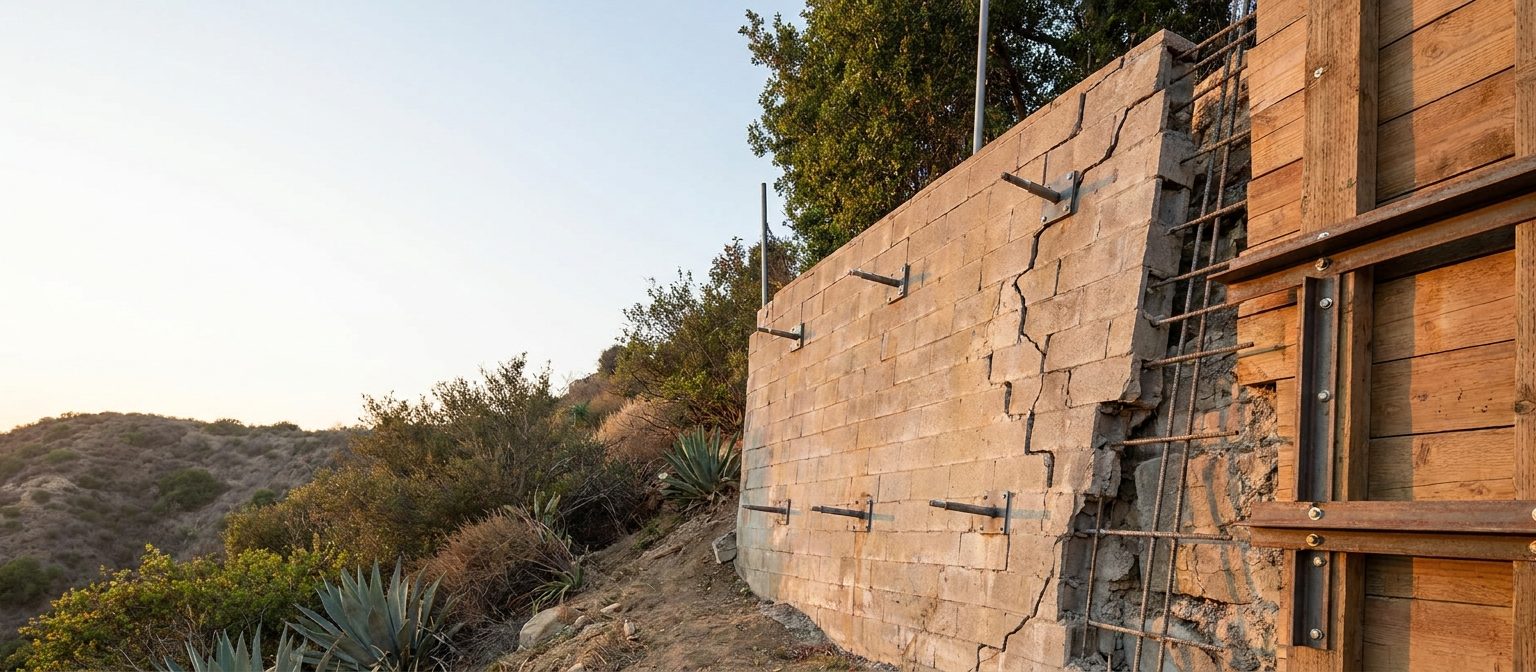
Glendale has more old retaining walls per street than anywhere else we work. Chevy Chase Canyon and the blocks above Brand Park were terraced generations ago, and a great many of those original walls are still standing — unreinforced, undrained, and carrying loads that have grown as properties were extended above them.
These walls do not fail the way modern ones do. They were built as gravity structures, holding by mass alone, so they tend to rotate outward from the base rather than bend or crack. A Glendale repair assessment usually starts by working out what the wall actually is, because a mortared stone gravity wall from the 1940s and a block wall from 1985 need entirely different conversations.
What We Look For on a Glendale Wall
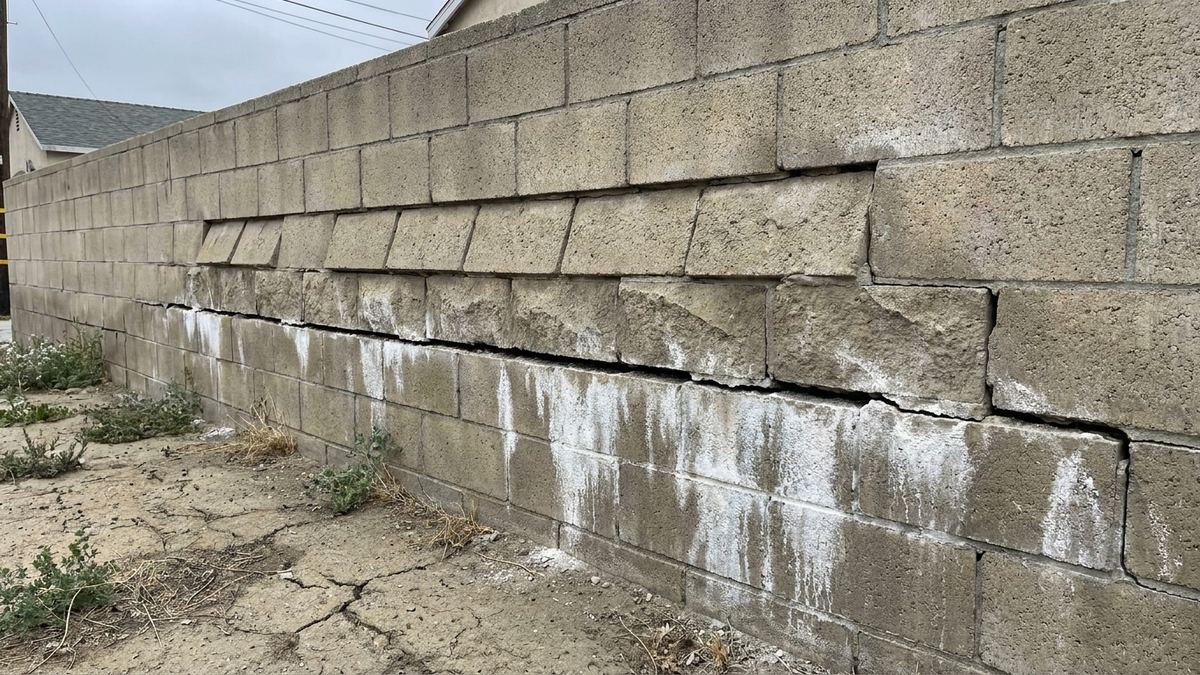
- Outward rotation from the base. The gravity-wall failure mode. The wall stays intact and tips as a unit.
- Mortar loss between stones. On older masonry this is the wall slowly ceasing to act as one mass.
- Bulging in one panel. Where a section has lost its bond with the rest of the run.
- New load above an old wall. An extension, a deck or a paved parking area added decades after the wall was built.
- Runoff scouring at the base. Verdugo canyon water concentrating where the wall meets the ground.
What Is Actually Causing It
Age plus changed loading plus Verdugo runoff. None of these walls was designed for the water volumes that reach them now, and many are carrying loads that were added long after they were built. That combination is why Glendale produces so much repair work relative to its size.
How We Repair Walls in Glendale
Identify the wall type first.
Gravity, mortared masonry and reinforced block all fail and get fixed differently.
Anchor rather than demolish where possible.
Old walls with sound faces can often be held with tiebacks, which preserves both the wall and the garden.
Repoint and re-drain older masonry.
Restoring the mass action and giving the water a route.
Replace where the base has gone.
Once a gravity wall has rotated significantly, holding it is usually more expensive than rebuilding it.
Assessment Before Anything Else
Every Glendale repair starts with working out which of those causes you actually have, because the wrong diagnosis is how people spend a great deal of money without fixing anything. The visit is free, you get an itemised written scope, and if a repair will hold we say so — and if it will not, we say that too. Permits, where the work needs them, go to the City of Glendale.
Retaining Wall Repair FAQ's for Glendale
My wall is old stone. Can it be saved?
Often, yes. If the face is sound and the base has not rotated far, repointing plus drainage plus anchors can hold it — and that keeps a wall that is frequently better looking than anything replacing it would be.
Why is a wall from the 1940s failing now?
Usually because the load changed or the water did. Extensions, decks and paving added above these walls over the decades ask more of them than they were built for.
Does Glendale run its own plan check?
Yes, its own building department with its own hillside requirements — not the LADBS process.
It's rotating rather than cracking. Is that better?
It is a different failure mode, typical of gravity walls. Whether it is better depends entirely on how far it has gone, which is a measurement rather than a judgement.
The wall is on the boundary. Whose is it?
Depends on where it sits and who it retains for. Worth settling before work is commissioned — our assessment can describe the condition factually to support that.
Repairs We Carry Out in Glendale
Each of these covers one condition in detail — what it looks like, what causes it and what fixing it involves. Or start from the retaining wall repair overview.
If the wall turns out to be past repair we also build new — see retaining wall installation in Glendale, hillside and slope work, or everything we do in Glendale.