When the Wall Is Not the Problem
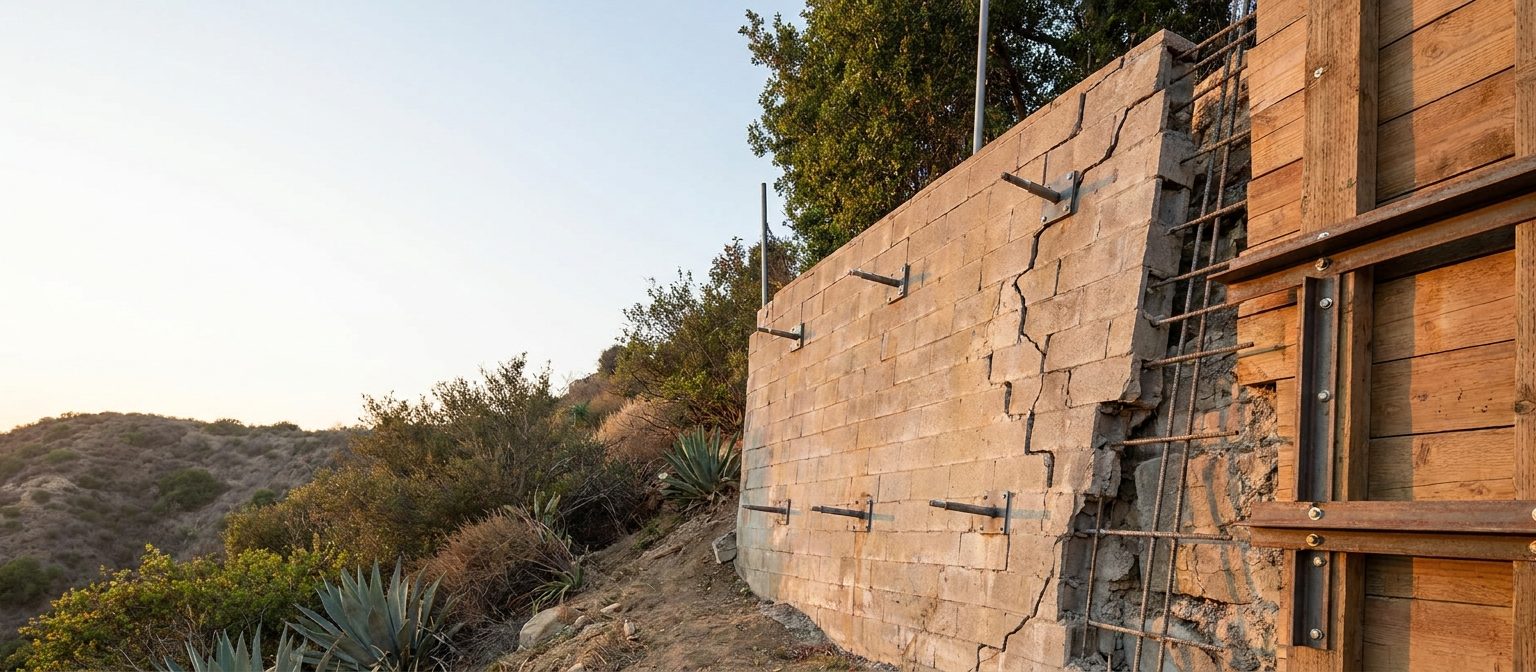
Malibu repair calls need a different first question from anywhere else: is this a wall problem or a slope problem? Along Big Rock and Las Flores, and on parts of the canyon roads inland, the ground itself has a documented history of movement. A wall on those parcels can be perfectly built and still fail, because it is founded in material that is going somewhere.
That distinction governs everything. A wall failing under soil pressure is a repair. A wall riding a moving slope is a geotechnical problem with a wall attached, and rebuilding it without addressing the movement is money spent on a countdown. We would rather establish which one you have before quoting anything.
What We Look For on a Malibu Wall
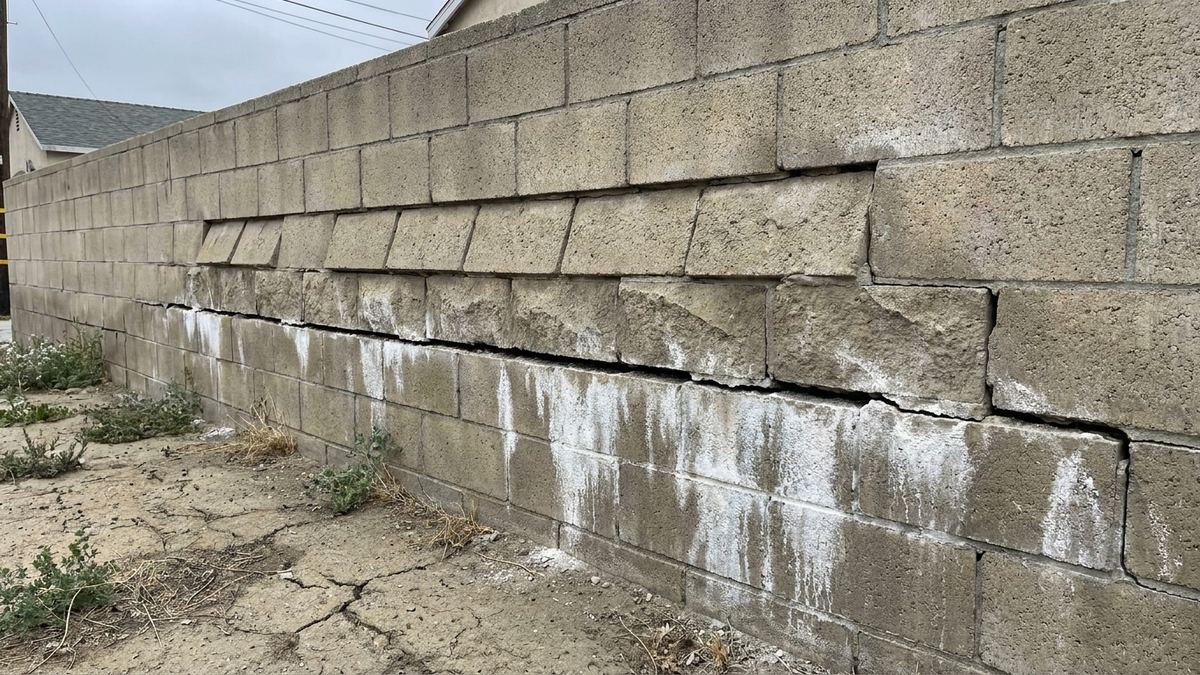
- Movement with no water event to explain it. Points at deeper ground movement rather than hydrostatic pressure.
- Cracking in driveways, decks and paths as well. The whole parcel is moving, not just the wall.
- An arc of cracking upslope of the wall. The head of a slide, and a finding that changes the whole conversation.
- Repairs that fail again in the same place. The strongest indicator that the cause was never the wall.
- Corroded steel in previous repairs. The coastal environment attacking earlier work from the inside.
What Is Actually Causing It
On the mapped slide areas, ground movement. Elsewhere along the coast, marine corrosion of embedded steel and the fire-then-rain cycle in the canyons. Very little of Malibu's repair work is the simple hydrostatic failure that dominates inland.
How We Repair Walls in Malibu
Geotechnical assessment first, on the slide-prone stretches.
This is the honest order, even though it delays a quote.
Piers or anchors past the failure surface.
Where movement is real, the fix has to reach ground that is not moving.
Marine-grade corrosion protection.
On every steel element, without exception, in this environment.
Say plainly when a wall is not the answer.
On some of these parcels it genuinely is not, and we would rather tell you than take the job.
Assessment Before Anything Else
Every Malibu repair starts with working out which of those causes you actually have, because the wrong diagnosis is how people spend a great deal of money without fixing anything. The visit is free, you get an itemised written scope, and if a repair will hold we say so — and if it will not, we say that too. Permits, where the work needs them, go to the City of Malibu.
Retaining Wall Repair FAQ's for Malibu
Is my property in a mapped landslide area?
Parts of this coast are, and it is the first thing to establish. On those parcels the geotechnical picture determines what is possible before any wall design is meaningful.
My wall was repaired and failed again. Why?
Usually because the original diagnosis was wrong — the wall was treated when the ground was the problem. A repair that fails in the same place twice is telling you something specific.
Does Malibu handle its own permits?
Yes, and coastal zone requirements can apply on top of the standard building review. Both are design-stage questions.
How bad is the corrosion problem here?
Significant. In this environment the specification of corrosion protection on embedded steel is often what determines whether a repair lasts decades or years.
Should I repair before or after the wet season?
Before, wherever possible — and after a fire in the canyons above you, urgently. The rain is the deadline, not the calendar.
Repairs We Carry Out in Malibu
Each of these covers one condition in detail — what it looks like, what causes it and what fixing it involves. Or start from the retaining wall repair overview.
If the wall turns out to be past repair we also build new — see retaining wall installation in Malibu, hillside and slope work, or everything we do in Malibu.