Canyon Seepage and Coastal Corrosion
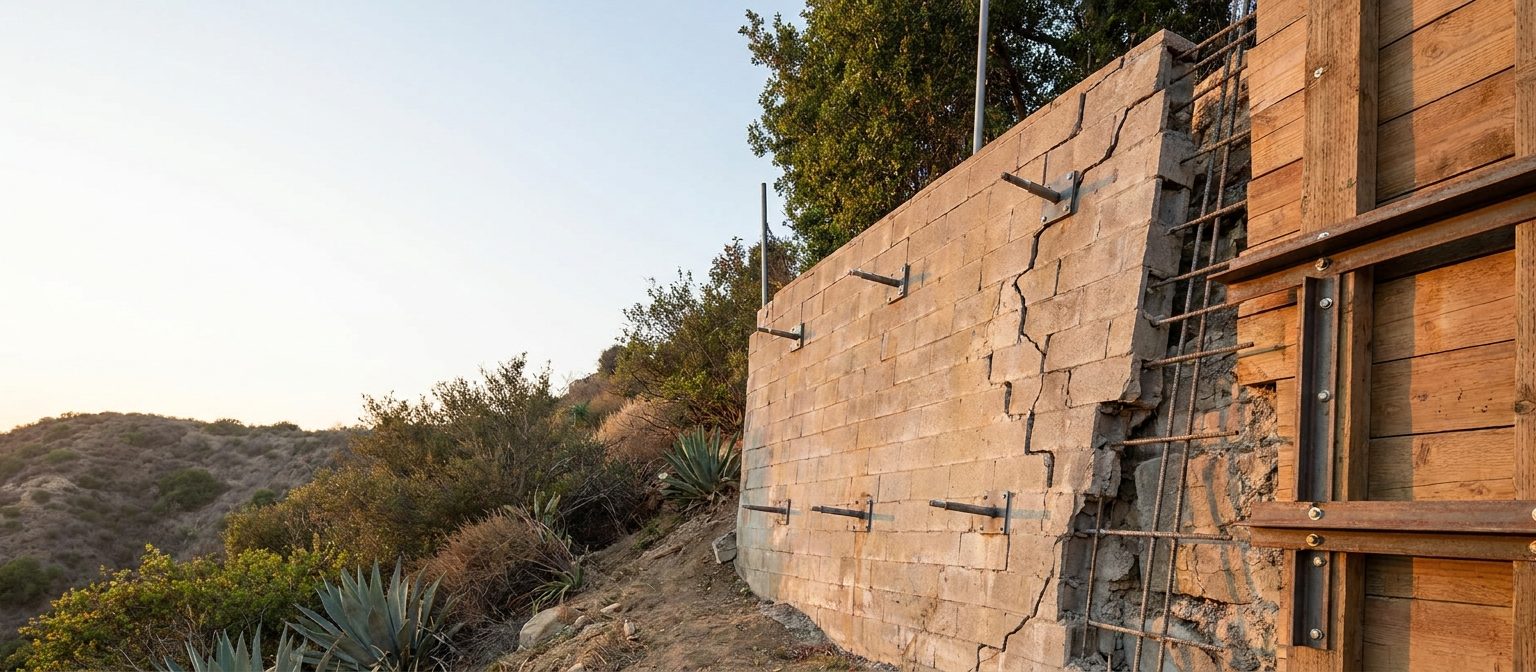
Palisades repair work splits between the canyons — Rustic and Temescal — and the properties closer to the bluffs. In the canyons the issue is water that never really leaves: shaded, north-facing slopes under heavy tree cover that stay damp long after the rest of the city has dried out, feeding seepage into walls month after month.
Nearer the coast a second mechanism takes over. Salt-laden air corrodes any steel in or behind a wall, and on repairs that used anchors or reinforcement without adequate protection, the failure is the steel rather than the concrete or the soil. We see walls here where the visible masonry is sound and the thing holding it has quietly rusted away.
What We Look For on a Pacific Palisades Wall
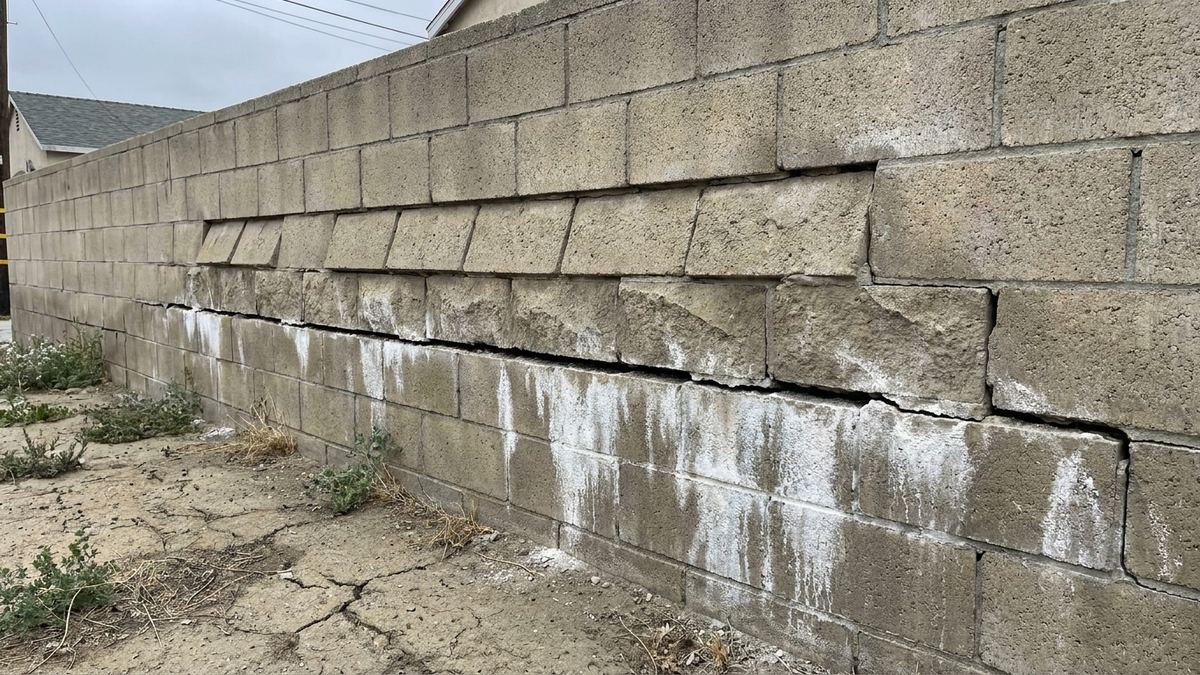
- Persistent damp through the dry season. In shaded canyon locations this is the normal condition, and it is what walls here have to be built to tolerate.
- Rust staining from the face. Steel corroding inside the wall, and a serious finding.
- Spalling concrete around embedded steel. Corroding steel expands and breaks the concrete off from the inside.
- Moss and algae over large areas. Confirms continuously wet conditions rather than seasonal.
- Anchor heads deteriorating. On previously repaired walls, the repair itself failing at its most exposed point.
What Is Actually Causing It
Continuous moisture in the shaded canyons, and marine corrosion nearer the coast. Between them they attack walls in ways that inland failures do not — through the materials rather than through the loading.
How We Repair Walls in Pacific Palisades
Diagnose corrosion properly.
Rust staining and spalling mean the problem is inside the wall. Surface repair over corroding steel achieves nothing.
Replace steel with correctly protected specification.
Galvanising, coatings and cover appropriate to a marine environment, not the inland default.
Manage moisture rather than fight it.
In permanently damp locations, drainage plus materials that tolerate wet is more realistic than trying to keep the wall dry.
Re-detail exposed anchor heads.
Capped and protected, since that is where corrosion starts on previously repaired walls.
Assessment Before Anything Else
Every Pacific Palisades repair starts with working out which of those causes you actually have, because the wrong diagnosis is how people spend a great deal of money without fixing anything. The visit is free, you get an itemised written scope, and if a repair will hold we say so — and if it will not, we say that too. Permits, where the work needs them, go to LADBS.
Retaining Wall Repair FAQ's for Pacific Palisades
There's rust staining on my wall. How serious?
Serious enough to investigate promptly. It means steel inside the wall is corroding, and corroding steel expands and breaks the surrounding concrete apart from within. Patching the face does not address it.
Why is my wall always damp when the rest of the garden is dry?
Shaded north-facing canyon slopes with heavy tree cover hold moisture year-round here. It is normal for the location, and walls need to be specified for it rather than assumed to dry out.
Does salt air really reach my property?
Further inland than most people expect. Where a repair involves anchors or embedded steel, the corrosion protection is specified for a marine environment as a matter of course.
A previous repair is failing. Why?
Frequently at the anchor heads, which are the most exposed part of the system. Inadequate capping and protection is a common shortcut and a predictable failure.
Do canyon lots need hillside review?
Most do. Pacific Palisades is City of Los Angeles, so LADBS with the hillside ordinance.
Repairs We Carry Out in Pacific Palisades
Each of these covers one condition in detail — what it looks like, what causes it and what fixing it involves. Or start from the retaining wall repair overview.
If the wall turns out to be past repair we also build new — see retaining wall installation in Pacific Palisades, hillside and slope work, or everything we do in Pacific Palisades.