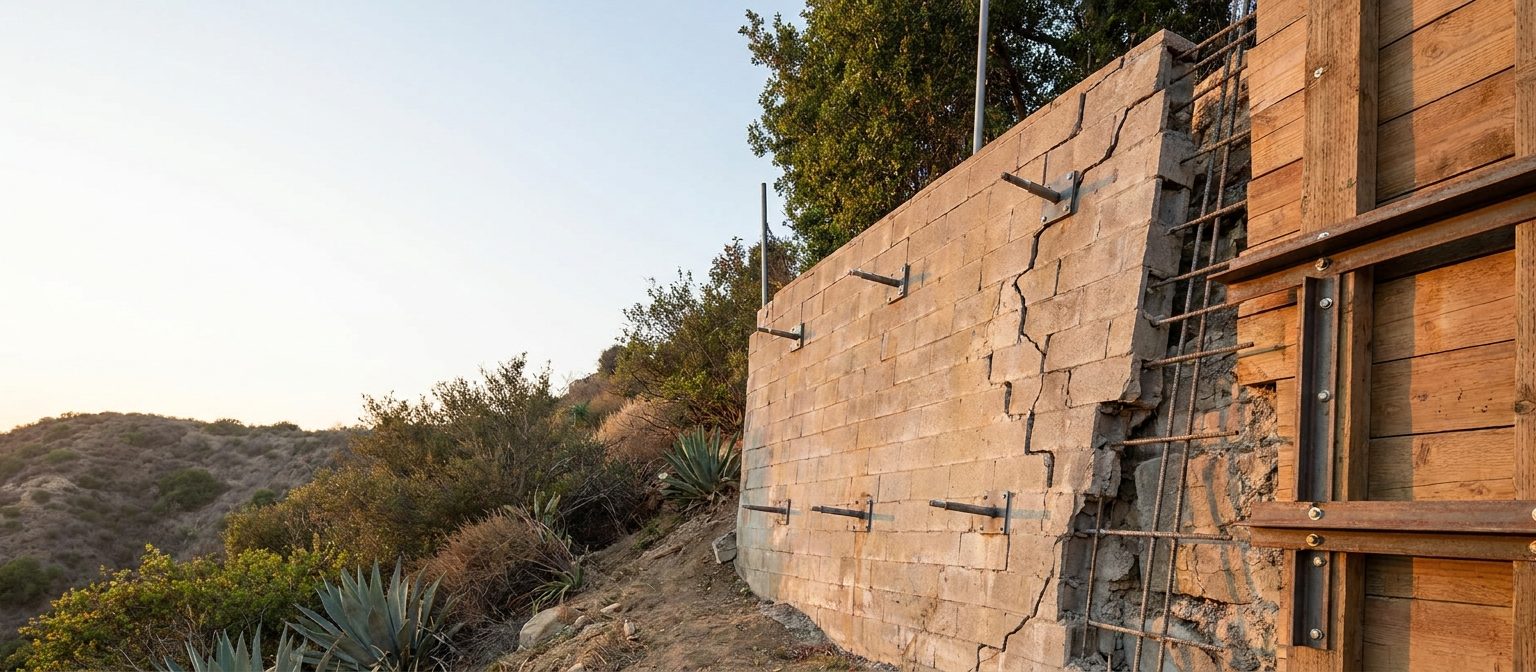
Century-Old Walls Around the Arroyo
Pasadena has the oldest retaining walls we work on. The neighbourhoods around the Arroyo Seco, the streets in the San Rafael Hills, and the older blocks running toward Eaton Canyon are full of walls built a hundred years ago in river rock, granite and early concrete — beautiful, unreinforced, and built to standards that predate the calculations we now design to.
These walls fail slowly and gracefully, which is both the good news and the problem. Mortar erodes, stones loosen, a face bulges a little each decade, and because nothing dramatic happens nobody intervenes. By the time an owner calls, the wall has often lost enough mass action that holding it costs more than it would have five years earlier.
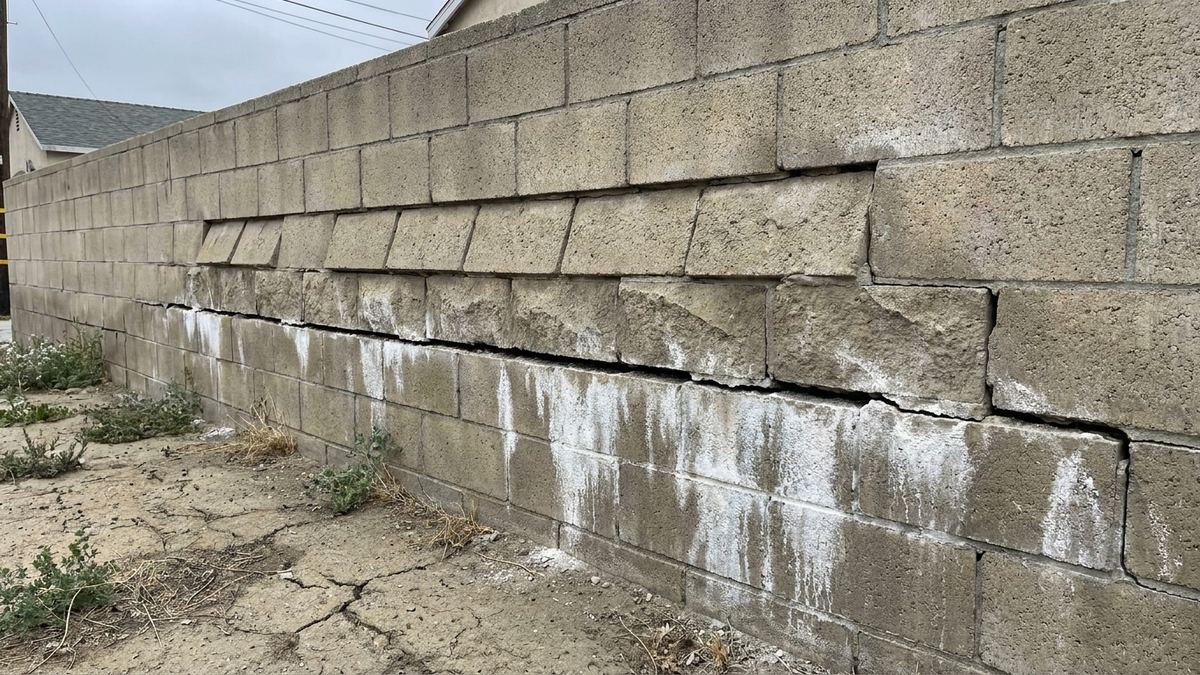
What We Look For on a Pasadena Wall
- Loose or missing stones. The wall gradually ceasing to act as a single mass.
- Mortar eroded well back from the face. Common on century-old lime mortars, and the thing that starts the decline.
- A slow bulge in one section. Decades in the making, and easy to miss without sighting along the wall.
- Vegetation rooted into the face. Roots widening joints and holding water against the masonry.
- Ground settling behind the wall. Material escaping through the joints, which hollows out the backfill.
What Is Actually Causing It
A century of water passing through masonry that was never drained, plus mortar that has outlived its design life. Nothing here failed suddenly; these walls have been slowly losing the ability to work as one mass, and the ones that stand are the ones that were built massively enough to tolerate it.
How We Repair Walls in Pasadena
Repoint with a compatible mortar.
Modern cement mortar on a historic wall does more harm than good. Matching the original matters structurally, not just visually.
Add drainage the wall never had.
Frequently the single highest-value intervention on these walls.
Rebuild sections in salvaged stone.
Keeping the original material where the wall has to come apart.
Hidden reinforcement where it is warranted.
Anchors and internal work that hold the wall without changing what it looks like.
Assessment Before Anything Else
Every Pasadena repair starts with working out which of those causes you actually have, because the wrong diagnosis is how people spend a great deal of money without fixing anything. The visit is free, you get an itemised written scope, and if a repair will hold we say so — and if it will not, we say that too. Permits, where the work needs them, go to the City of Pasadena.
Retaining Wall Repair FAQ's for Pasadena
Can a hundred-year-old stone wall be repaired?
Usually, and it is generally worth doing. These walls are frequently better built than anything that would replace them, and repointing plus drainage plus discreet anchoring can add decades.
Should I repoint with normal mortar?
No. Modern cement mortar is harder than the stone and the original lime mortar, and it traps moisture and damages the masonry. Compatibility is a structural question, not an aesthetic one.
Is my property in a historic district?
Parts of Pasadena are, and where that applies the appearance of any repair is reviewed. Worth establishing before work is designed.
There are plants growing out of the wall. Does it matter?
Yes. Roots widen joints and hold water against the masonry. Removing them carefully is part of the repair, not a gardening job.
Does Pasadena run its own plan check?
Yes, its own building department, separate from LA County and LADBS.
Repairs We Carry Out in Pasadena
Each of these covers one condition in detail — what it looks like, what causes it and what fixing it involves. Or start from the retaining wall repair overview.
If the wall turns out to be past repair we also build new — see retaining wall installation in Pasadena, hillside and slope work, or everything we do in Pasadena.